Study tumour–immune interactions under controlled dynamic conditions
FlowIMMUNE is being developed to enable circulating immune-cell assays in a familiar well-plate workflow, helping you study immune-cell infiltration, cytokine response and treatment effects under more physiologically relevant conditions.
The challenge
Immune-cell interactions are dynamic, but most in vitro models are not
Tumour–immune interactions depend on how circulating immune cells, tumour tissue and therapeutic compounds are exposed to each other over time.
Static models can miss important aspects of this interaction, while existing dynamic MPS systems often require specialised fluidics and offer limited throughput.
For immuno-oncology assays, the challenge is therefore not only to create flow, but to combine controlled dynamic biology with sufficient scalability for experimental screening.
Why dynamic conditions matter
Dynamic exposure can better recreate key aspects of tumour–immune biology
Physiological exposure
Flow influences how cells are exposed to biopharmaceuticals and other treatment modalities.
Immune-cell circulation
Recirculation enables repeated interaction between circulating immune cells and the tissue model.
Cell–cell interaction
Dynamic conditions support the study of PBMC binding, infiltration and tumour–immune interaction.
Cytokine response
The system can support assay designs that include cytokine-release and immune-response endpoints.
Assay-ready throughput
Testing multiple compound concentrations together with positive and negative controls requires sufficient throughput and reproducibility.
Introducing FlowIMMUNE
Dynamic tumour–immune interaction in a familiar plate workflow
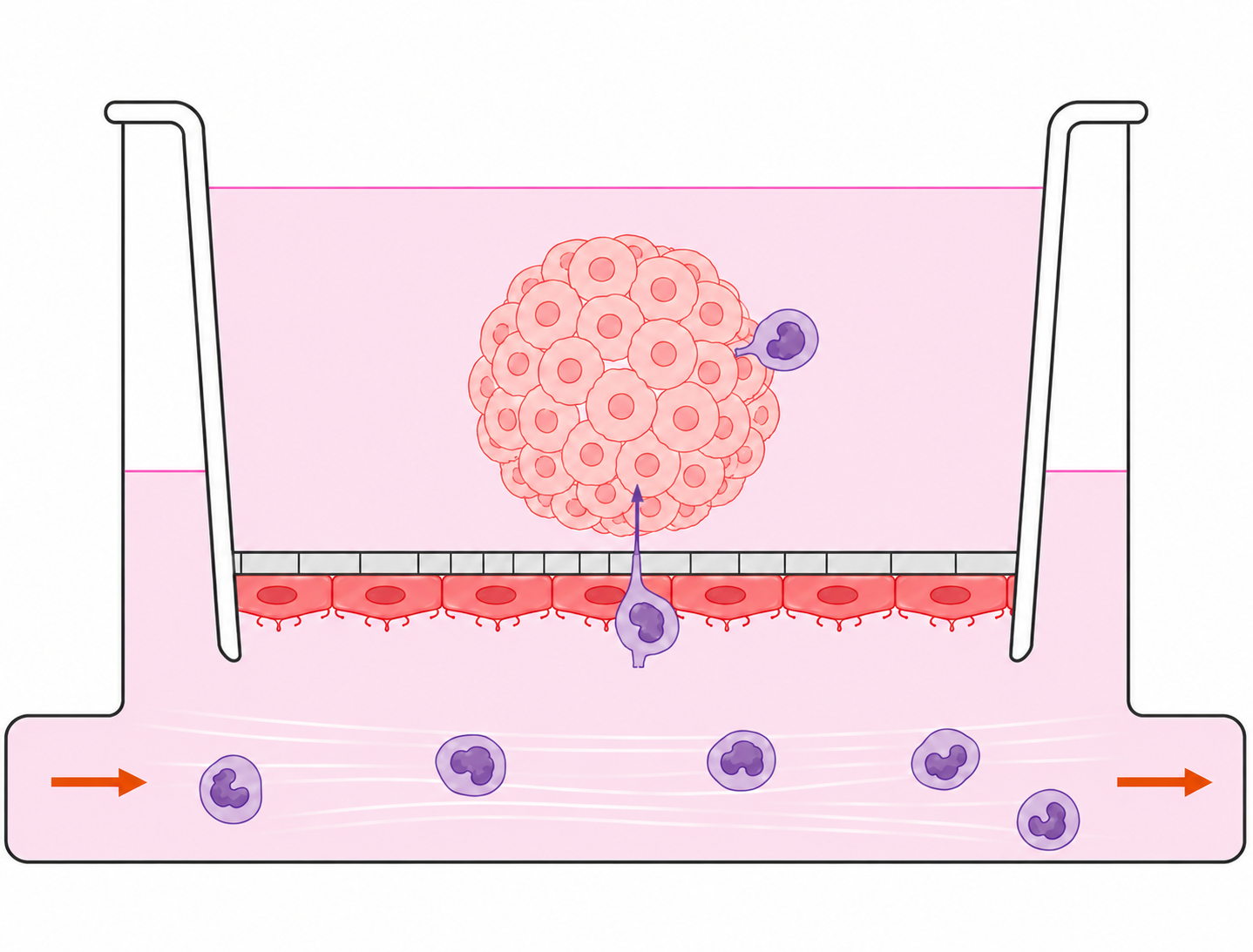
FlowIMMUNE combines controlled recirculating flow with standard well-plate and Transwell-based workflows.
The aim is to provide the biological relevance of a dynamic tumour–immune model while retaining the usability and scalability required for industrial assay development.
Tumour organoid in Transwell + circulating immune cells in the receiver compartment.
What FlowIMMUNE enables
A scalable platform for dynamic immune-cell assays
Circulating immune cells
Create controlled recirculating exposure around the tissue model.
Tumour–immune interaction
Study immune-cell binding, infiltration and interaction with tumour organoids.
Cytokine response
Include functional immune-response endpoints alongside imaging and molecular read-outs.
Standard workflow fit
Built around a 24-well format and standard Transwell inserts.
Designed for experimental scale
Run multiple conditions, concentrations and controls without moving to a complex microfluidic setup.
Developed around human tumour organoid models
FlowIMMUNE is currently being developed together with Erasmus MC using human immunocompetent tumour organoid models.
The development work includes:
- PDX-derived tumour organoids
- Patient-derived organoid models
- Circulating immune cells
- Immune-cell infiltration
- Cytokine response
- Treatment-response endpoints
How it works
Controlled recirculating flow without external fluidics
FlowIMMUNE uses the same MACplate platform as FlowGUT.
Magnetic hair-like structures integrated into the plate generate controlled fluid movement below the Transwell insert. This enables circulating immune cells to move through the receiver compartment without pumps, tubing or external fluidic circuits.
The system is designed to operate in a standard incubator environment and to remain compatible with familiar laboratory workflows.
For teams developing more relevant immuno-oncology assays
FlowIMMUNE may be relevant for teams working on:
- tumour–immune interaction
- immune-cell infiltration
- PBMC-based assays
- cytokine-release assays
- biopharmaceutical treatment response
- patient-derived tumour models
- dynamic organoid assays
Developing an immune-cell assay that could benefit from controlled circulation?
We are currently developing and validating FlowIMMUNE together with research and industry partners.